geo therm


Geothermal energy is heat from within the Earth that can be used to generate electricity, heat buildings and cool them.
Geothermal energy is the energy harnessed from the Earth’s crust. It is rapidly emerging as one of the most promising and reliable frontiers in clean energy engineering.
Produced by the slow decay of radioactive particles, which is a natural process that occurs in all rocks, geothermal energy was long considered too expensive and geographically constrained to compete with other renewables.
However, innovative drilling technologies and closed-loop systems have recently transformed the field and uncovered vast new potential to produce clean, continuous power with a capacity factor often exceeding 90 percent.
This makes geothermal energy a viable alternative to fossil-fuel baseload sources like coal or natural gas, with data suggesting it could meet up to 15 percent of global electricity demand by 2050.
How does geothermal energy work?
The searing layer of magma beneath the planet’s crust continuously releases heat through the decay of radioactive elements such as uranium (U) and potassium (K). This heat moves outward through layers of rock and can be captured by drilling wells to access hot water, steam, or dry rock formations.
Engineers use the heat to drive turbines that produce electricity or to provide direct heating for buildings, greenhouse,s and different industrial processes. It is considered both sustainable and nearly inexhaustible.
Scientists estimate that within just 33,000 feet (10 kilometers) of the surface, the geothermal energy holds 50,000 times more power than all the world’s oil and gas reserves combined.
“If you take all fossil, all nuclear, and all other forms of renewable energy combined, they’re not even a millionth of a millionth of the thermal stores of energy below the Earth’s surface,” Carlos Araque, CEO and co-founder of the US-based energy firm Quaise Energy, pointed out.
According to Araque, geothermal energy is available everywhere on massive scales. “It’s mind-boggling, and to get it, we only have to go down two to 12 miles,” he stated. “That’s how close we are to infinite clean energy, no matter where you are in the world.”
Advantages of geothermal energy
Geothermal energy is not only more environmentally friendly than conventional fuel sources such as coal and other fossil fuels, but it also stands as one of the most sustainable and dependable clean power sources available today.
It produces minimal emissions compared to fossil fuels, and unlike solar or wind, it is stable and reliable as it provides continuous power regardless of the weather or the time of day.
What’s more, it requires no fuel, and reduces both costs and resource extraction impacts. Aside from electricity production, geothermal systems efficiently provide heating and cooling through ground-source heat pumps.
Ultimately, geothermal plants have exceptionally high efficiency rates and often convert more than 90 percent of the extracted heat into usable energy. They also require far less land than solar or wind farms, making them ideal for regions with limited space or sensitive ecosystems.
The downside of going geothermal
While geothermal energy offers many advantages, it also comes with several challenges that limit its widespread use. Although it produces far fewer emissions than fossil fuels, environmental side effects can occur when trapped gases beneath the surface are released during drilling.
Some enhanced geothermal systems can also trigger minor earthquakes due to changes in underground pressure as water is injected into rock layers. The high upfront costs are also another drawback.
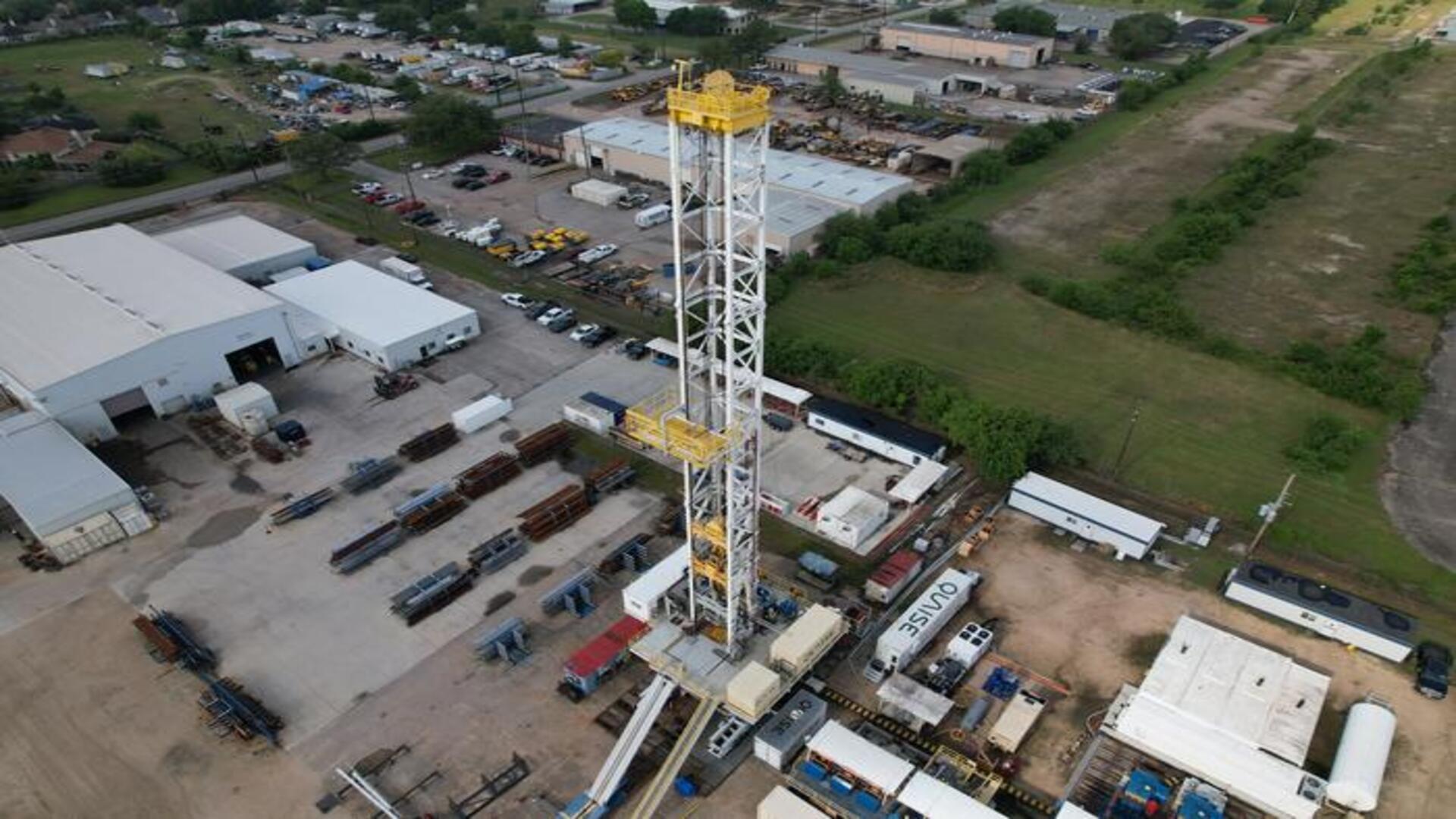
Credit: Quaise Energy
In addition, drilling deep wells and building specialized infrastructure requires significant investment, though the long-term operating costs are relatively low.
Finally, maintaining sustainability depends on careful management and underground reservoirs. This means that fluids must be reinjected faster than they’re depleted to ensure the system remains viable.
A new wave of innovation
To address the drawbacks, engineers have recently started combining different drilling and sensing methods, as well as system design, to expand geothermal access beyond traditional hot spots, lower costs, and boost efficiency while minimizing environmental impact.
For instance, Quaise Energy has developed a millimeter-wave drilling technology that can vaporize rock using high-frequency electromagnetic waves rather than conventional drill bits.
The approach, adapted from nuclear fusion research at MIT, could potentially enable access to geothermal heat sources more than 12 miles deep, where temperatures exceed 932 degrees Fahrenheit (500 degrees Celsius).
The Massachusetts-based company recently hosted the first of several live demos, showing its record-breaking drill. It reportedly drilled 387 feet (118 meters) into solid granite without any physical contact.
Meanwhile, Texas-based Fervo Energy introduced horizontal drilling and fiber-optic sensing, which are techniques they borrowed from the gas industry. The company’s pilot project in Nevada demonstrated real-time monitoring of subsurface conditions. It allowed engineers to optimize fluid flow and energy output with remarkable precision.
Eavor Technologies, located in Canada, pioneered a closed-loop “radiator style” geothermal system that eliminates the need to inject water into fractured rock. Instead, it circulates a heat transfer fluid through a sealed underground circuit, similarly to a giant subterranean radiator.
The big picture
Geothermal energy is rapidly evolving into a vital part of the global clean-energy transition. Reports suggest that with new technologies enabling access to heat at depths beyond 26,000 feet, the world’s geothermal potential could reach nearly 600 terawatts of capacity.
This, according to data, is enough to supply global electricity demand 140 times over. In addition, if costs continue to fall, geothermal energy could deliver up to 800 gigawatts of installed power.
This could produce around 6,000-terawatt hours of electricity annually by 2050, and meet 15 percent of projected global demand. Operating at capacity factors above 75 percent, geothermal energy offers one of the most stable and dispatchable renewable power sources available.
Along with strategic investments, which are projected to reach USD 2.5 trillion by mid-century, and support from the oil and gas industry, next-gen geothermal could become one of the world’s most scalable and cost-effective solutions for achieving net-zero energy systems.
The global geothermal energy market size was estimated at USD 7.45 billion in 2023 and is projected to reach USD 9.22 billion by 2030, growing at a CAGR of 3.1 percent from 2024 to 2030. The growing demand is fueled by advances in drilling and heat pump technologies, supported by government incentives and global clean energy targets.

Stay up-to-date on engineering, tech, space, and science news with The Blueprint.
RELATED ARTICLES


JOBS

General Application

Research Engineer / Scientist, Safety Oversight
Software Engineer, Research - Human Data
Software Engineer, Full-Stack
Lead Research Engineer / Scientist, Chemical & Biological Risk
Robotics Software Engineer
Research Engineer, Human-Centered AI
Research Engineer / Scientist, Health AI
Full Stack Software Engineer, Research Team
Software Engineer, Full Stack
Research Engineer / Research Scientist, Alignment
Software Engineer, Data Visualization
Research Engineer / Scientist, Interpretability
Product Performance Engineer
Comments
Post a Comment